
How To Reverse PCOS
I’ll explain simplistically, if you’re suffering

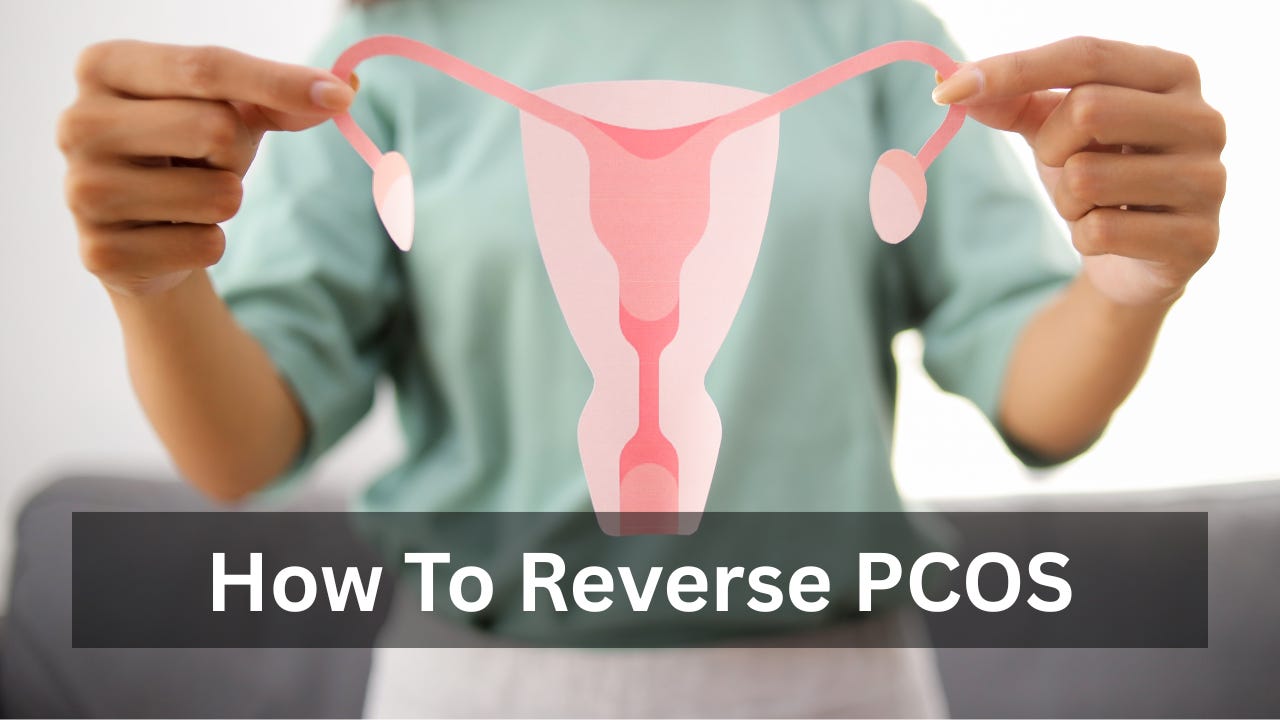
PCOS affects an estimated 170 million women worldwide.
Chances are, you or someone you love and know is affected by PCOS.
Often, it is communicated to patients that the prognosis for this condition is not favorable.
If we look at PCOS through the “old” lens and the “old way” of addressing the condition, then that is a fairly accurate statement. However, it is not a fully true statement.
In fact, women suffering with PCOS have a substantial amount of power and control to reverse this condition. Which I will explain, below.
Let’s dive in…
If you haven’t heard, about 2 weeks ago PCOS (Polycystic Ovarian Syndrome) was renamed.
More about that here in a bit.
First, let’s discuss “PCOS”…
For decades, women were told PCOS was an ovary issue.
They were also often told that PCOS was a condition that they would often live with the rest of their life, they could not overcome and reverse the disease, and the chances of remaining infertile the rest of their life was probable.
The truth is none of those are accurate. In fact, if I may be so bold, they are all wrong.
Once you understand the mechanisms of why someone has PCOS, you can take the steps to actually reverse it.
From a functional perspective, providers like myself always looked at it differently.
PCOS is not just about cysts.
It’s not just about irregular cycles.
It’s not just about fertility.
It’s a whole-body metabolic and hormonal signaling gone array. With some gut dysfunction “mixed in” as well.
The combination of these dysfunctions leads to the diagnosis of PCOS.
And as mentioned earlier, they renamed the condition to essentially what I have been saying for years.
I don’t think they actually listened to me 😉, it’s just the disease process and what is causing PCOS has:
become more obvious and
become more accepted
They renamed PCOS because “Polycystic Ovarian Syndrome” was never telling the whole story.
The new name for the condition is Polyendocrine Metabolic Ovarian Syndrome (PMOS). You can read about the official renaming from the Endocrine Society here.
Let’s break down the new name before I go any further:
Poly = Many
Endocrine = Hormones
Metabolic = Obviously, metabolic function…which is at a cellular level throughout the body
Ovarian = pertains to the ovaries in women
Syndrome = a grouping of symptoms
So, if we put that all together, the disease process is essentially a group of symptoms that women have, due to the multiple hormonal and metabolic dysfunction occurring in their body (all simultaneously).
The name PMOS reflects what so many women are actually dealing with:
Insulin resistance
Weight gain
Inflammation
High androgens
Acne
Hair thinning
Cravings
Fatigue
Anxiety
Thyroid symptoms
Cycle changes
Fertility struggles
For these women, we must look at them as a whole person. And subsequently treat & address all of the dysfunction that is occurring in their bodies… simultaneously. Not just get myopic on their ovaries and the cysts found there.
We must ask things like:
Why is insulin high?
Why is inflammation present?
Why are hormones disrupted?
Are there associated gut dysfunction symptoms?
Why is the nervous system stressed?
Why is the liver overwhelmed?
Why is the body storing fat instead of utilizing it for energy?
When you start asking questions like these, you can begin to connect the dots.
And when you “connect the dots”, you can then address the condition as a metabolic, endocrine, inflammatory, gut dysfunction, liver dysfunction and whole body issue.
You may be asking, “Ok, so if all these issues are occurring, where do I start!”
Great question. I’m glad you asked 😜
I’m going to give you 2 answers.
My First Answer
First, you’re going to want to know where you stand and what is the biggest driving force.
Frankly, you’re going to need to get some comprehensive lab work done by your doctor. Some of it you may have already had. However, I’m guessing multiple of the below are being left out.
Once you know where you stand, you can then target those areas of dysfunction first, so you can get the most positive change in your health.
Metabolic
Fasting Insulin
Fasting Glucose
HbA1c
A Full Lipids Panel
Hormones
Total Testosterone
Free Testosterone
Estradiol
Progesterone
DHEA Sulfate
SHBG
Thyroid
TSH
T4 Total
T4 Free
Free T3
Reverse T3
Thyroid Antibodies
Inflammation
Vitamin D
hsCRP
Iron Function
Hemoglobin
Ferritin
Serum Iron
Transferrin %
TIBC
Stress
Salivary Cortisol
These tests will give you a “baseline” of where you stand in each of the major areas that contribute to PMOS.
My Second Answer:
My second answer on where to get started is going to involve giving you some practical advice that you can begin today.
While everyone’s situation is a little different (hence, why I recommend getting baseline testing), there are somethings that are patterns among nearly every women suffering with PMOS.
I’d probably say THE most common issue I see across the board, is elevated systemic insulin.
There is a reason I listed “fasting insulin” as the very first test above 😉
Sadly, practically no doctor runs it on their patients because it is typically only run when there is a suspected pancreatic tumor (FYI, the pancreas produces insulin).
HOWEVER, fasting insulin is a fantastic functional metabolic test.
Your standard lab will have fasting insulin as “normal” if it is under 18.7 uIU/mL.
However, that is simply for helping diagnose a pancreatic tumor.
From a metabolic standpoint, you should be under 10.0 uIU/mL.
And optimally, you should have your fasting insulin between 2.5 and 5.0 uIU/mL.
Now, if I was a betting man, and you have PMOS, I would put a TON of money down that you have a fasting insulin above 10.0 uIU/mL.
It is that common with PMOS.
Why?
Because systemic elevated insulin drives:
Metabolic dysfunction
Which leads to weight gain
Which further leads to hormonal dysfunction (of all kinds)
Elevated insulin also leads to:
Elevated systemic inflammation
Which contributes to gut dysfunction
Which creates nutrient absorption issues
Which leads to skin and hair issues… and a whole host of other issues
Ultimately, it’s a vicious cycle and it’s all connected.
Therefore, if I had to land on a single “cornerstone” that most all other PMOS issues are tied to, it would be elevated systemic inflammation.
For a practical step that you can begin taking today, it would be to begin improving and lowering your insulin levels.
“So, How Can I Fix My Elevated Insulin Levels?”
Another great question you are asking. 😉
Simplistically, there are 2 things you must do:
Decrease the items & conditions that elevate insulin
And when you do have a rise in insulin (we all do), you want to make sure that insulin can actually “unlock” the cells effectively, so the insulin does not stay elevated.
Blood sugars largely drive insulin response. But there are other factors that drive and elevate insulin as well.
It’s not as simple as “eat less carbs”. Yes, there are specific types of carbs that elevate blood sugars (and subsequently insulin) more, but I regularly have my patients with PMOS eat a substantial amount of carbs at each meal.
I won’t rehash everything here because I’ve already written about it extensively. But if I was going to point you to one article to home in on, it would the article I wrote entitled “The Quickest Way To Lower Inflammation Naturally: After 20+ Years In Practice, This Works The Best.”
If I could only point you to one things that would make the largest positive impact in your PMOS condition, it would be to A) read that article and B) implement what it says.
That article is Part 2 of a 6-Part Series.
If you want to take it to a “whole other level”, I would then:
Read Part 4, and implement it
I would next Read Part 1, and implement it.
I’d read Part 3 after that, and implement it.
I would then read Part 5… and you guessed it, implement that
And finally, I would read Part 6 and begin doing what it says.
When you take the above step-by-step and do what they state, you WILL address your PMOS holistically.
For many, just these 6 steps will address their PMOS and reverse their condition.
There will be others who’ve had a thyroidectomy, or a partial hysterectomy, etc. and will need to work with a competent provider who can narrow down the hormonal issues, and use targeted therapeutics.
And on this note, I would suggest ALWAYS using bio-identical hormones if you do need hormone replacement therapy as one of your therapies to overcome PMOS.
I’ll Leave You With This….
Whether you’ve been recently diagnosed, or you’ve had PMOS/PCOS for decades, you can overcome the condition.
As I tell patients, “Your body has an AMAZING ability to heal, as long as you give it the right environment….and IF you give it that right environment long enough.”
The above articles I wrote are foundational to giving your body the right environment.
When you start there, you are building on a solid foundation that will stand the test of time.
Your One Actionable Step This Week
Begin addressing the root issues that drive PMOS.
Get tested and get a baseline of where you stand with the above listed tests.
Today, begin regulating your insulin and begin functionally lowering it. Use the above linked resources.
REMINDER: You only get one body to live this life in. Treat it well!
Have a great week!
To your health,
~Dr. M. Brandon Pettke
Whenever you’re ready, there are 2 additional ways I can help you transform your health:
1) My Book: $19.99 USD
I originally wrote this for my patients. I was taught a lot of things wrong as a doctor. My patients also believed a lot of what I was incorrectly taught. However, I didn’t have the time to teach them what took me years to unlearn. So, I wrote a book for them. It’s now available for you. Metabolism 2.0- How To Lose Weight & Optimize Your Health, Using Real Food.
2) Apply To Work With Me Directly
I’ve been fortunate to have tremendous success in the clinic with those who struggle with stubborn weight they can’t lose, low energy & gut dysfunction. I am now helping a select few people each month, outside of my clinic. I work with people across America & internationally. You Can Learn More About Who I Help & The Application Process Below.
P.S. Thanks for reading! If you enjoyed this, feel free to share it with others.
I love helping people improve their health. And you never know what kind of impact you could make on someone’s life, with just a simple share…